COMMON GROUND
Collaborations by Primates & Artists
November 6 — December 4, 2026
An exhibition and fundraiser to benefit the Primate Rescue Center
All proceeds from the auction will directly support the Primate Rescue Center’s mission of providing lifetime care and a safe haven for all of its residents.
ABOUT THE EXHIBITION
Common Ground brings together thirteen contemporary artists from across the country who collaborated with thirteen primates residing at the Primate Rescue Center (PRC) in Jessamine County, Kentucky. The sanctuary’s 30-acre property provides state-of-the-art facilities and lifetime care for roughly fifty primates across multiple species, including chimpanzees, vervets, and other monkeys rescued from the exotic pet trade, research laboratories, and the entertainment industry. As part of the Center’s enrichment program, residents have opportunities to paint with non-toxic tempera, using brushes, their hands, and even their tongues to apply color to canvas.
With sweeping bands of color and exuberant flourishes, these simian artworks can only be described as Abstract Expressionist in style, as though our monkey friends are paying homage to such painterly greats as Joan Mitchell and Cy Twombly. In some, remnants of the primates’ surroundings—grass, twigs, and oat flakes—are embedded in the painted surfaces, recalling Jackson Pollock’s integration of everyday debris into his drip paintings.
Each participating human artist was invited to use a painting created by a PRC resident as the starting point for a collaborative work. The resulting canvases reflect a wide range of approaches, with each artist honoring their primate partner’s existing marks and color, while also transforming the canvas to reflect their own conceptual and aesthetic concerns.
For the artists — Bill Adams, Emily Arthur, Rowan Bird, Jana Cariddi, Georgia Henkel, John Hitchcock, Scott Ingram, David Kaiser, Cynthia Ryan Kelly, François Morelli, William J. O’Brien, Jena Seiler, and Ben Tollefson — the canvas becomes its own kind of common ground: a space where human and primate gestures intersect, overlap, and build upon one another. In bringing these distinct forms of creative expression together, Common Ground invites us to consider the innate connections between humans and the other species with whom we share the world.
The Primate Rescue Center operates entirely with public donations, memberships, and volunteer support. Sales of these unique collaborations will help the Center’s dedicated staff provide a lifetime of care to the many primates who depend on them.
Participating Artists and Primates include:
Bill Adams and Zulu (with assistance from Ike)
Emily Arthur and Noelle (with assistance from Rodney)
Rowan Bird and Rodney
Jana Cariddi and Ike
Georgia Henkel and Noelle (with assistance from Rodney)
John Hitchcock and Bucky (with assistance from Mojo and Junior)
Scott Ingram and Martina (with assistance from Rodney)
David Kaiser and Donald (with assistance from Rodney and Martina)
François Morelli and Martina (with assistance from Noelle)
Jena Seiler and Dehlia (with assistance from Chester and Bisou)
Ben Tollefson and Jenny
Auction Details
Bidding is scheduled to close at 4:00 pm EST on Nov 14, 2026
ACCESS THE AUCTION SITE HERE
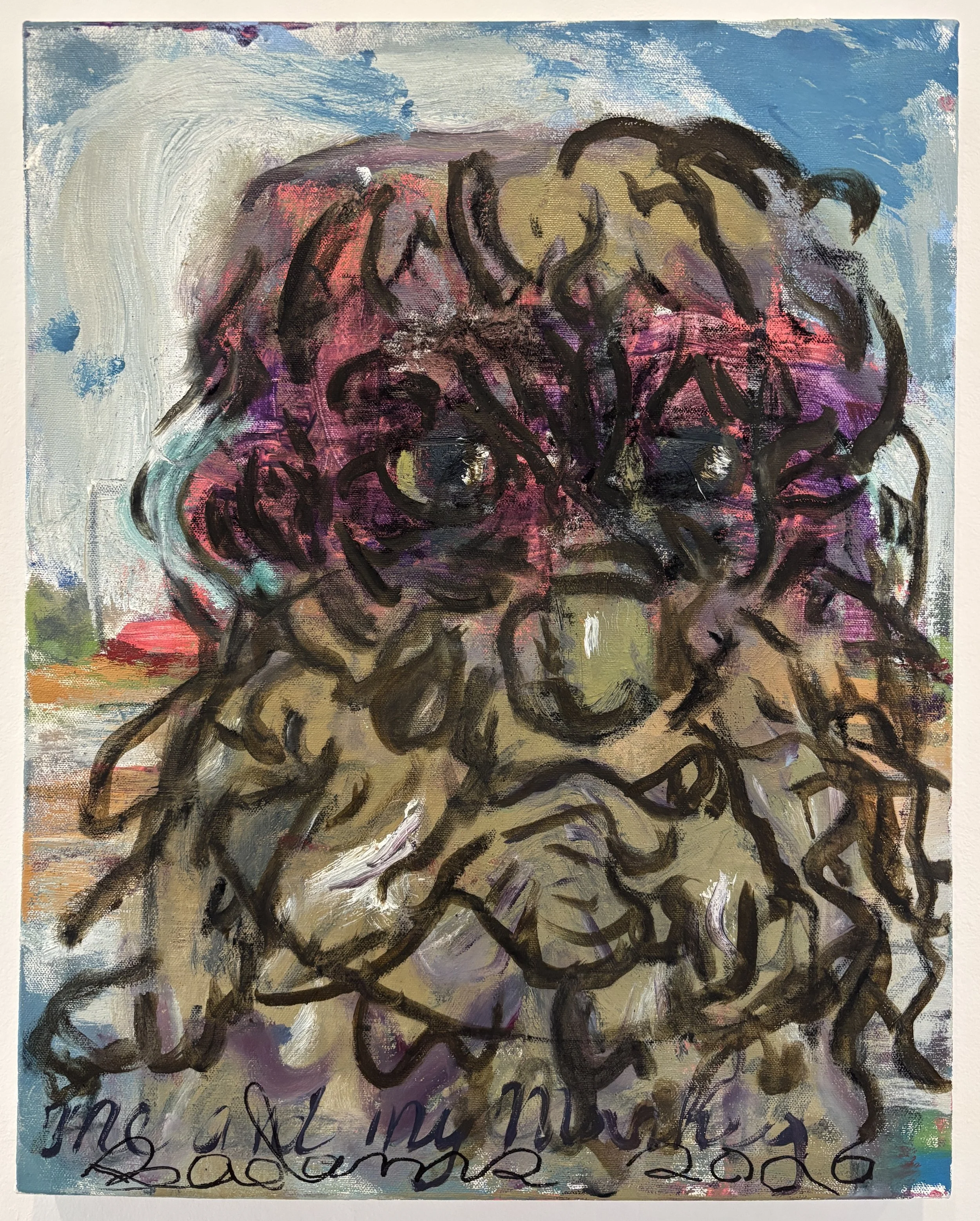
Bill Adams and Zulu (with Ike): Me and My Monkey, 2027. Tempera and oil on canvas. 20 × 16 inches.
With wild hair, a frantic energy and penetrating stare, this character appears to have quite a story to tell. New York-based artist Bill Adams brings his comic figuration to Zulu's canvas, turning the purple and coral abstraction into an enigmatic portrait.
Adams is known for his paintings, obsessive ballpoint pen drawings, and ceramic sculptures that explore states of human and animal anxiety, vulnerability, and companionship. He has exhibited at numerous New York galleries including Fredericks Fraser, Kerry Schuss Gallery, White Columns, and Shrine; and his solo exhibition, Blue Madness, was presented at the University of Kentucky Art Museum in 2016.
Zulu, meanwhile, is a little character herself. Small in stature but never short on confidence, she's quick to offer a kiss face to her favorite caregivers and will stand her ground when necessary. Fellow chimpanzee Ike also contributed to this painting.
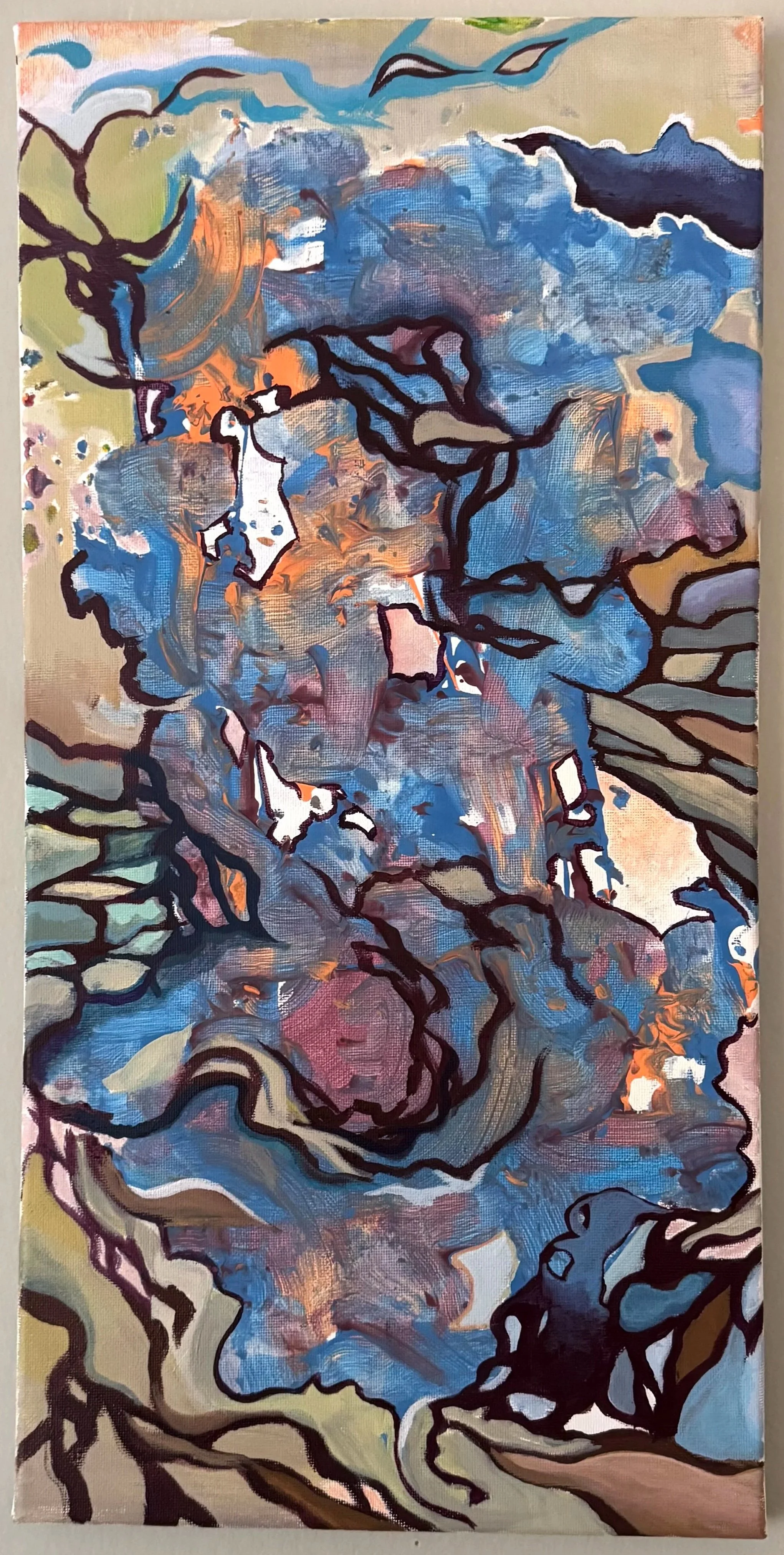
Rowan Bird and Rodney: Monkey River, 2026. Tempera and acrylic on canvas, 20 x 10 inches.
The swirling blue forms made by chimpanzee Rodney were transformed into a more structured composition by Jackson-Mississippi-based artist and designer Rowan Bird. Not surprising, given that Bird’s work includes large-scale stained-glass production and mural painting. The thick black lines surrounding areas of color in this collaboration function like the leading that holds glass pieces together in traditional architectural window designs. Here, Bird defines a landscape worth exploring, as natural forms begin to take shape—filled with undulating rocks, hills, and flowers.
As a painter, Bird creates expansive landscapes that capture mountains and valleys, and distinct qualities of light and atmosphere. His works have been exhibited regionally at venues including the Pacesetter Gallery in Flowood, Mississippi.
Rodney is a happy chimp, and his features match his personality. He has big floppy ears and a large brow ridge that makes him look like the goofy prankster that he is.
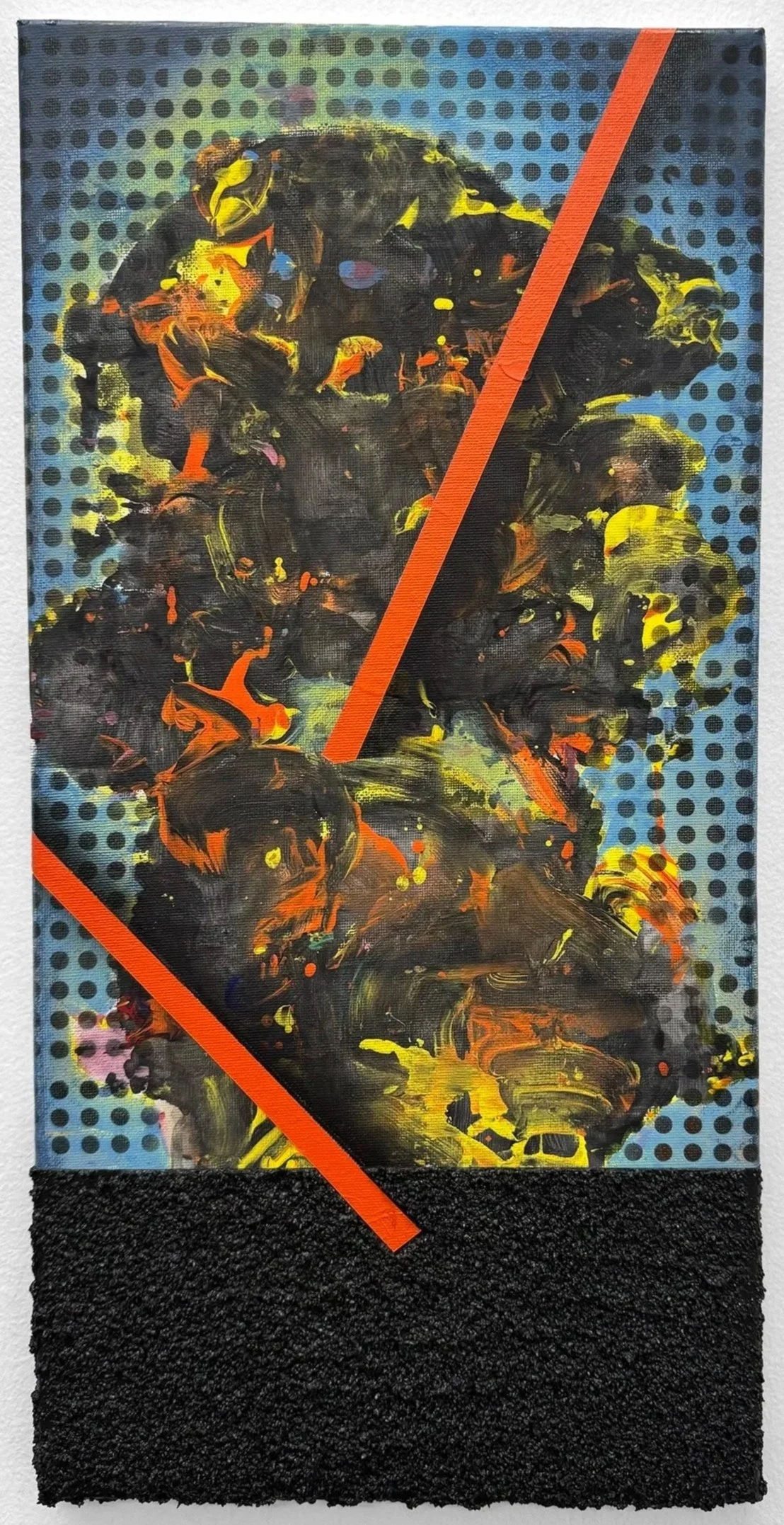
Jana Cariddi and Ike: Ike & Me, 2026. Tempera, acrylic, and pumice on canvas, 20 x 10 inches.
Abstract elements of form, color, texture, and structure come together in this robust collaboration between chimpanzee Ike and Jackson, Mississippi-based artist Jana Cariddi. Working with the original painting, she divided the canvas into discreet sections, and developed a layering of space with repeated dots, diagonal bars of orange, and a barrier of black.
Cariddi’s practice includes painting, drawing, and sculpture, and she often combines these in single works. On shaped wooden panels, she presents biomorphic forms that twist and bulge, often with illusionistic shadows and comic proportions. The natural and the artificial both feel welcome in her distinct visual world. Cariddi’s work has been exhibited across North America, including Pamplemousse Gallery in Richmond, VA; La Luz de Jesus Gallery, Los Angeles, CA; and the Bellevue Art Museum, Seattle, WA; among others. She will be a 2027 fellow at the Helene Wurlitzer Foundation in Taos, New Mexico.
Ike’s athletic build and 140 pounds of pure muscle lend him a formidable presence, which is reflected in the intensity and solidity of the dark forms found in his collaborative painting with Cariddi.
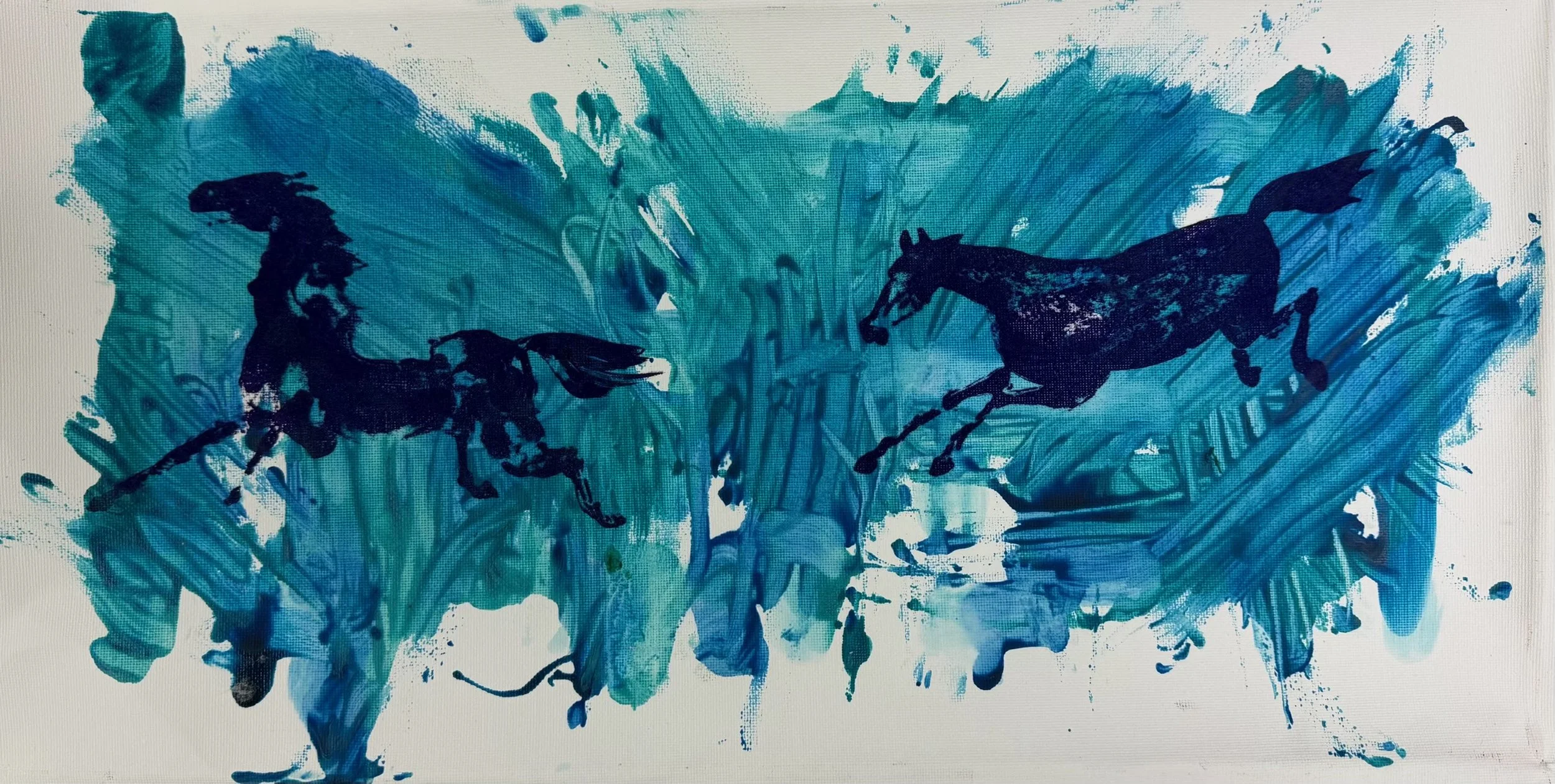
Emily Arthur and Noelle (with Rodney): Small Hopes, 2026. Tempera and screenprint with flocking, 10 x 20 inches.
The vibrant painting by chimpanzee Noelle was kept intact by Madison, Wisconsin-based artist Emily Arthur who thought it was the perfect site for two frolicking horses. She screen-printed them and added flocking to create a scene of pure equine ecstasy. Noelle’s active finger strokes become a Bluegrass field behind them.
It is not surprising to find Arthur picturing the horse, as she often investigates the natural world of flora and fauna. Birds, butterflies, deer, and trees are part of her investigation of displacement and loss relating to the environment. She has stated, “I see nature as an interdependent living force rather than as the backdrop for human events.”
Arthur often works with scientists, historians, and Indigenous scholars to obtain the research that informs her drawings, prints, and artist books. Her work is included in the permanent collections of institutions including the Smithsonian American Art and Portrait Gallery in Washington, D.C.; Saint Louis Art Museum; Denver Art Museum; and the Museum of the American West, among others.
Noelle is known for her quirky and unique personality, and her love of paper, magazines, and books, which she plays with while eating breakfast. She often tears out certain pages and will carry them around throughout the day. The playful chimpanzee Rodney assisted Noelle with her preliminary composition.
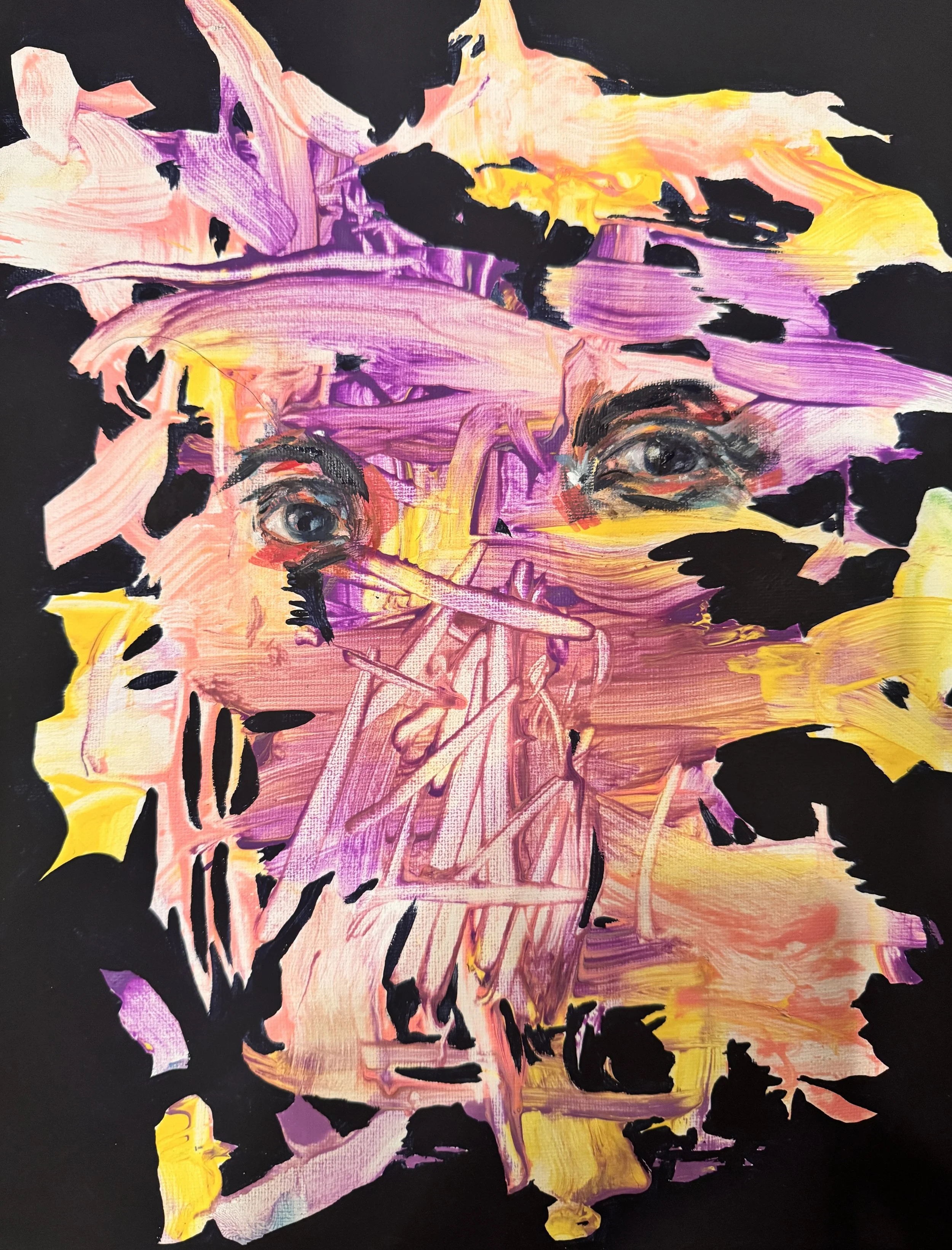
Georgia Henkel and Noelle (with Rodney): Monkey's Eyebrow, 2026. Tempera and gouache on canvas, 14 x 11 inches.
A pair of watchful eyes peer through a tangle of pink, purple and golden-yellow strokes in this collaboration between Lexington artist Georgia Henkel and chimpanzee Noelle. Henkel alters Noelle’s original canvas with carefully placed black areas, allowing the primate’s colorful marks to become part of an intriguing, fragmented portrait.
Henkel is an artist and educator whose works explore human and animal forms, and she often find inspiration from her collection of taxidermy, bones, clothing, and dolls. She has exhibited locally at the Lexington Art League and the University of Kentucky Art Museum; and has conducted workshops in Baracoa, Cuba.
Noelle is an independent soul who likes to keep tabs on what's happening around her, particularly when food is involved. She is always curious about what her troopmates are eating. Fellow chimpanzee Rodney also contributed to the painting.
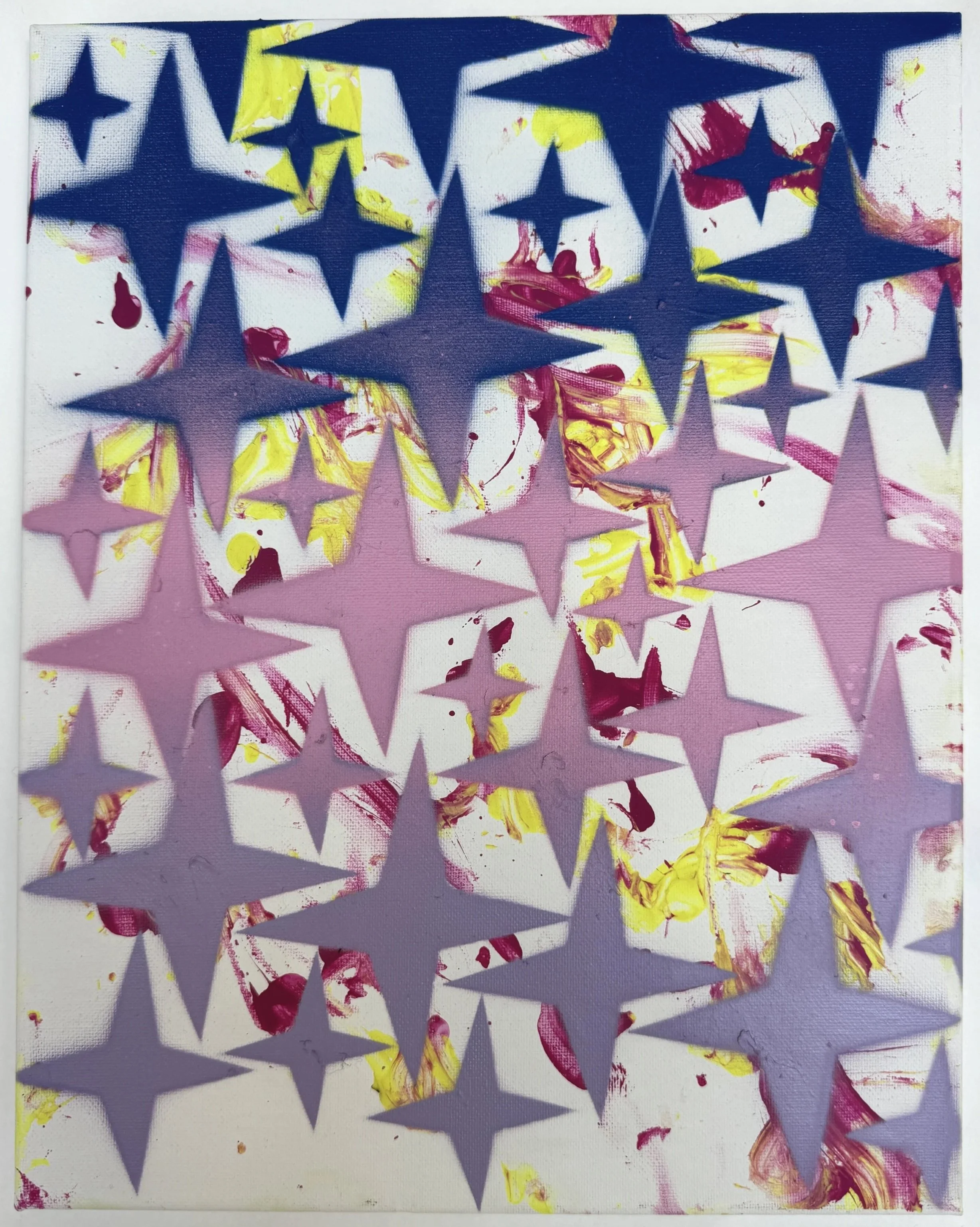
John Hitchcock and Bucky (with Mojo and Junior): Star Gazers, 2026. Tempera and spray paint, 14 x 11 inches.
A field of four-pointed stars in blue, pink, and lavender by Madison, Wisconsin-based artist John Hitchcock hover over a yellow and magenta painting by Bucky, a long-tailed macaque. This bold collaboration offers a pulsing rhythm of repeated shapes that alternate between presence and absence, deep space and frontal assault. Hitchcock’s use of the four-pointed star is a reference to the four cardinal directions and can be understood within certain indigenous communities to represent the sacred balance of the universe.
As an enrolled member of the Kiowa Tribe of Oklahoma, with Comanche and Northern European ancestry, Hitchcock uses his mixed media art to examine and reclaim narratives of Native community, land, and culture. He has shown at numerous national and international venues, including the National Gallery of Art in Washington D.C. and the Portland Museum of Art in Oregon. His body of work, Horse Songs, was 2nd Story’s inaugural exhibition in 2023.
Bucky is a shy and gentle boy but shows his excitement with vocalizations and lip-smacks when his caregivers bring food or new enrichment. Some of his favorite foods are grapes, avocados, bananas, apples, and cherry tomatoes. Fellow macaques Mojo and Junior helped Bucky with the initial painting.
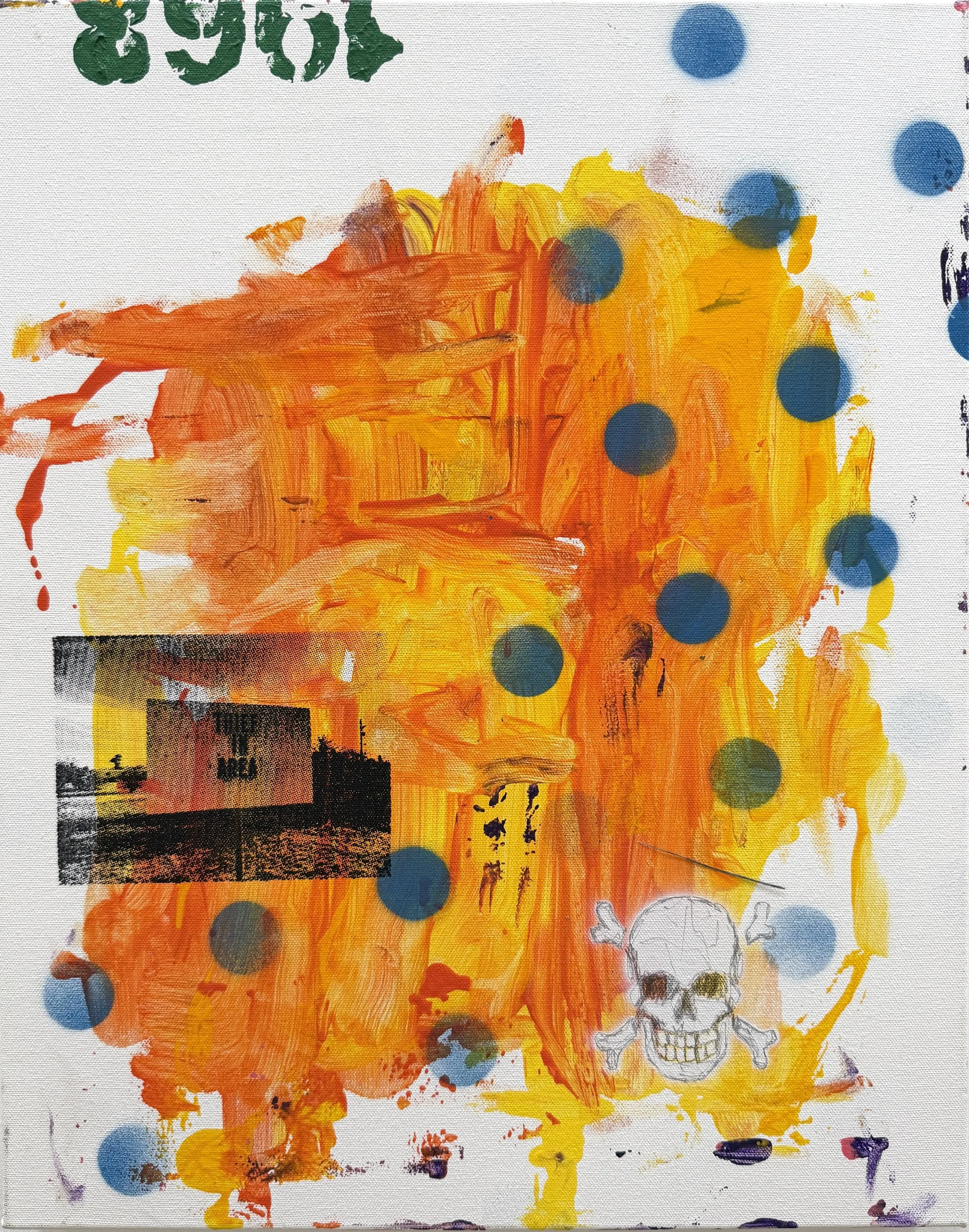
Scott Ingram and Martina (with Rodney): Untitled, 2026. Tempera, spray paint, acrylic, and graphite on canvas, 20 x 16 inches.
Bright orange and yellow paint are intersected by bold blue circles, graphic symbols, and a skull-and-crossbones in this collaboration between Atlanta-based artist Scott Ingram and Martina, the alpha female of Primate Rescue Center's chimpanzee troop.
Ingram uses Martina’s canvas as a ground for several elements from his ongoing series of Chaos Paintings, which combine sprayed and rolled paint applications, silkscreened images, fragmented language, and other visual data.
Ingram makes paintings, sculptures, and installations, often examining aspects of Modernist design and architecture. His work is in the permanent collection of Museum of Contemporary Art of Georgia and the High Museum of Art in Atlanta; and he is the founder of The Temporary Art Center, a curatorial project of pop-up exhibitions in Atlanta and beyond.
Martina has a commanding presence of her own. She is confident and independent, and has a fondness for shoes, inspecting the feet of everyone who passes by her enclosure. Fellow chimpanzee Rodney also added elements to this collaborative artwork.
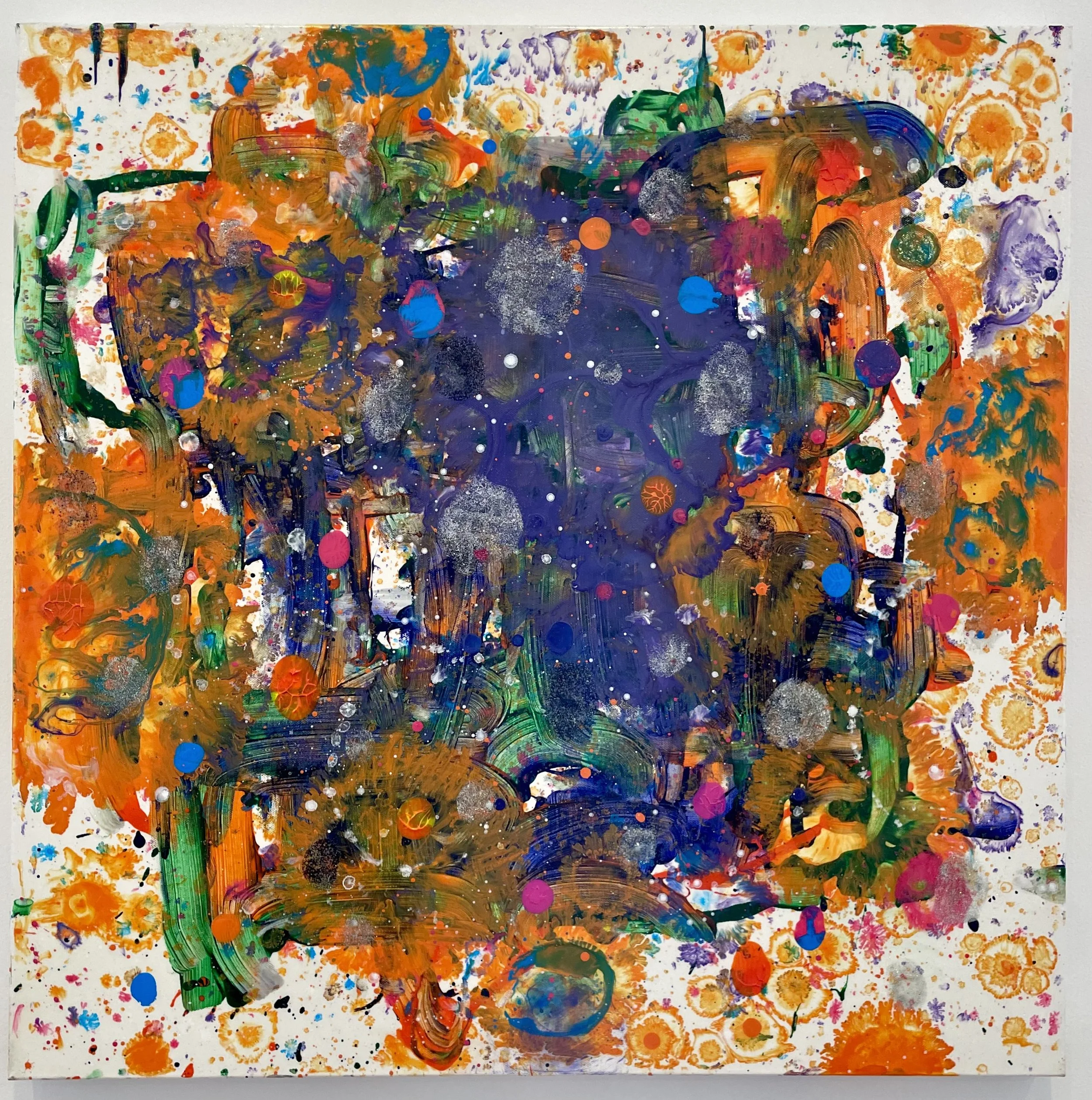
David Kaiser and Donald (with Martina and Rodney): Emergent #102926, 2026. Tempera, acrylic, and glass beads on canvas, 30 x 30 inches.
On top of a dense abstract painting by chimpanzee Donald, Lexington-based David Kaiser added a wide array of painterly marks, glitter, and translucent amoeba-like forms, building up the surface for maximum accumulation.
Kaiser is the Assistant Dean for Student Affairs and a Studio Instructor at the University of Kentucky, and his paintings and drawings are made by labor-intensive processes of dripping, layering, carving, and constructing. Like geological specimens, they are rooted in the physical world yet evoke something beyond it, suggesting altered states of perception and transcendence. Kaiser has exhibited at 65Grand Gallery in Chicago; Eastern Kentucky University in Richmond; SPACES in Cleveland; and Diverse Works in Houston, among others.
Donald is the current alpha-male at the Primate Rescue Center, and he is a quiet and diplomatic leader. He is known for making funny squeals and hums when he is relaxing. His favorite enrichment items are water pools and dolls.
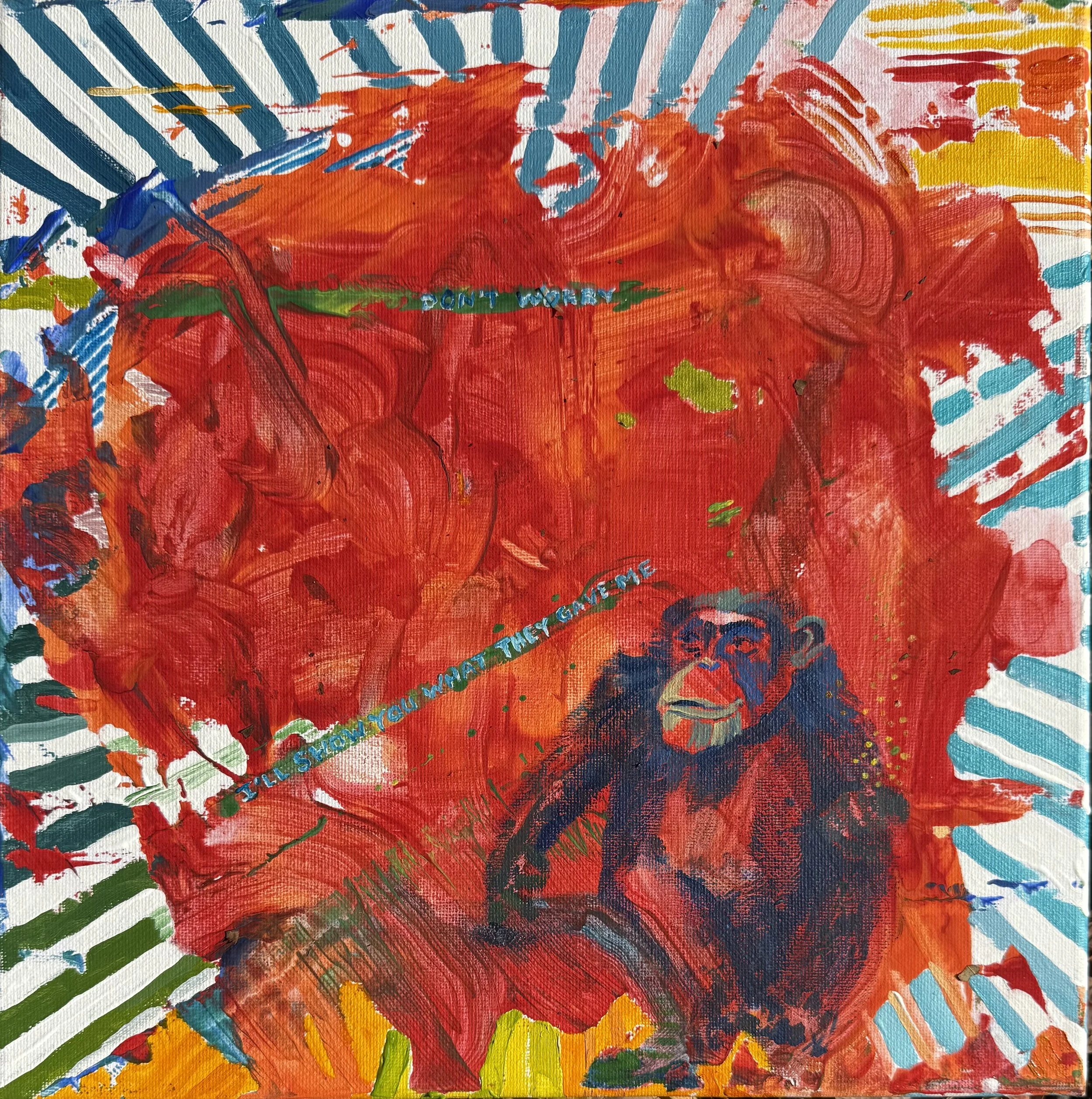
Cynthia Ryan Kelly with Rodney: Don't Worry ... I'll Show You What They Gave Me, 2026. Tempera and acrylic on canvas, 12 x 12 inches.
In this collaborative composition, chimpanzee Rodney began with swaths of vibrant vermilion paint, creating a solid, centralized form. Lexington-based artist Cynthia Ryan Kelly added contrasting streaks of blue and green that radiate toward the edges of the canvas, establishing a dynamic abstract backdrop against which she carefully rendered a portrait of Rodney himself.
Ryan Kelly is known for her boldly painted works that explore representation and abstraction. Still life, urban scenes, cloud formations, and patterns of architectural forms are all part of her free-wheeling vocabulary. Distinct bodies of work address more serious concerns including mountaintop removal and other environmental issues and ant-racism. She has exhibited at the Lexington Art League; The Pollinator Art Space/The Goat Farm in Atlanta; and Stola Contemporary Art in Chicago, among others.
At mealtime, Rodney’s high-pitched noises of excitement can be heard above everyone else. He really loves eating broccoli, iceberg lettuce, and strawberries.
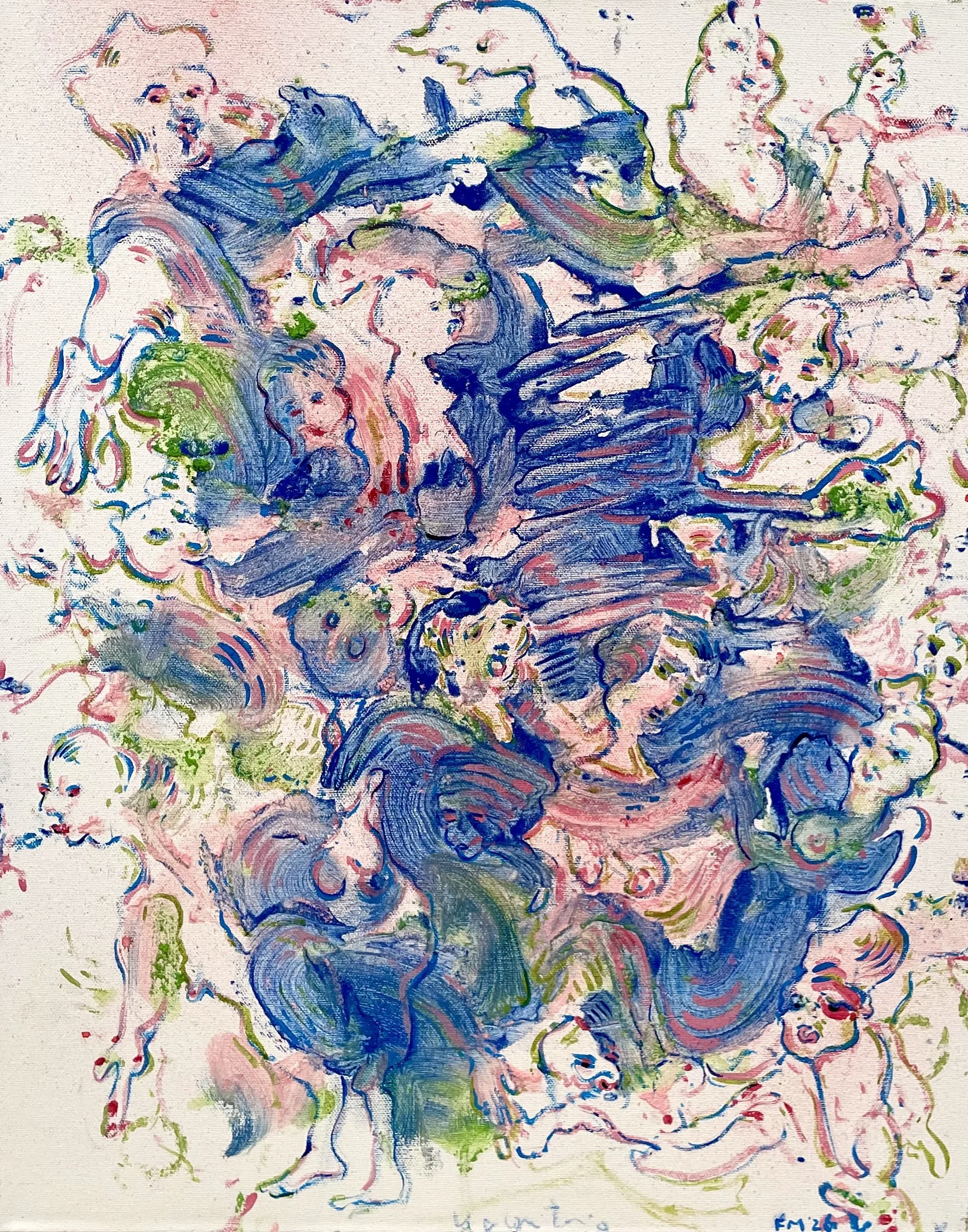
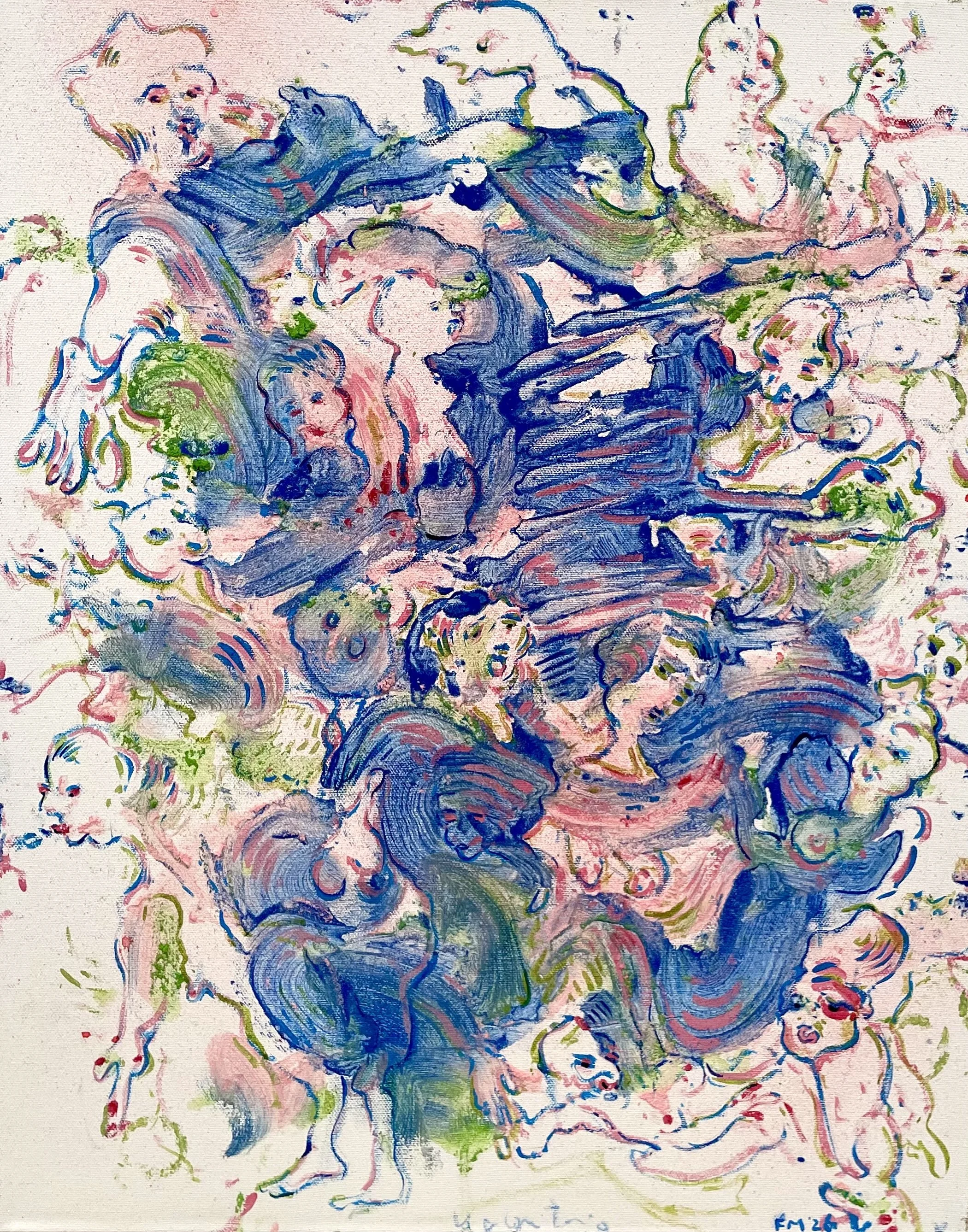
François Morelli and Martina (with Noelle): Lake Ontario, from the series Les riverains, 2026. Tempera, acrylic ink, and acrylic paint on canvas, 20 x 16 inches.
Working with the gestures of blue, green, and soft pink originally painted by chimpanzee Martina, Montreal-based artist François Morelli introduces numerous expressive faces and bodies that emerge from the colorful atmosphere. This painting is part of the artist’s Les riverains series, which is inspired by his neighbors in the Laurentians who live by the lakes and rivers in the region. The hybrid, fluid forms suggest a world where the boundaries between species dissolve, recalling our deep connection to the ecosystems sustaining us.
Morelli is an acclaimed Canadian artist whose drawings, installations, and performances explore emotional and psychological states, and socio-political realities. He is the recipient of Québec's prestigious Prix Paul-Émile-Borduas, and his work is included in the collections of museums including the Quebec National Museum of Fine Arts, Montreal Museum of Contemporary Art, Corcoran Museum of Art in Washington, D.C., and the Fluxeum in Weisbaden, Germany, among many others.
Martina, the confident alpha female of Primate Rescue Center's chimpanzee troop, knows a thing or two about living in a community: at the Center, she romps around with fellow chimpanzee Noelle, who worked with her on the original painting.
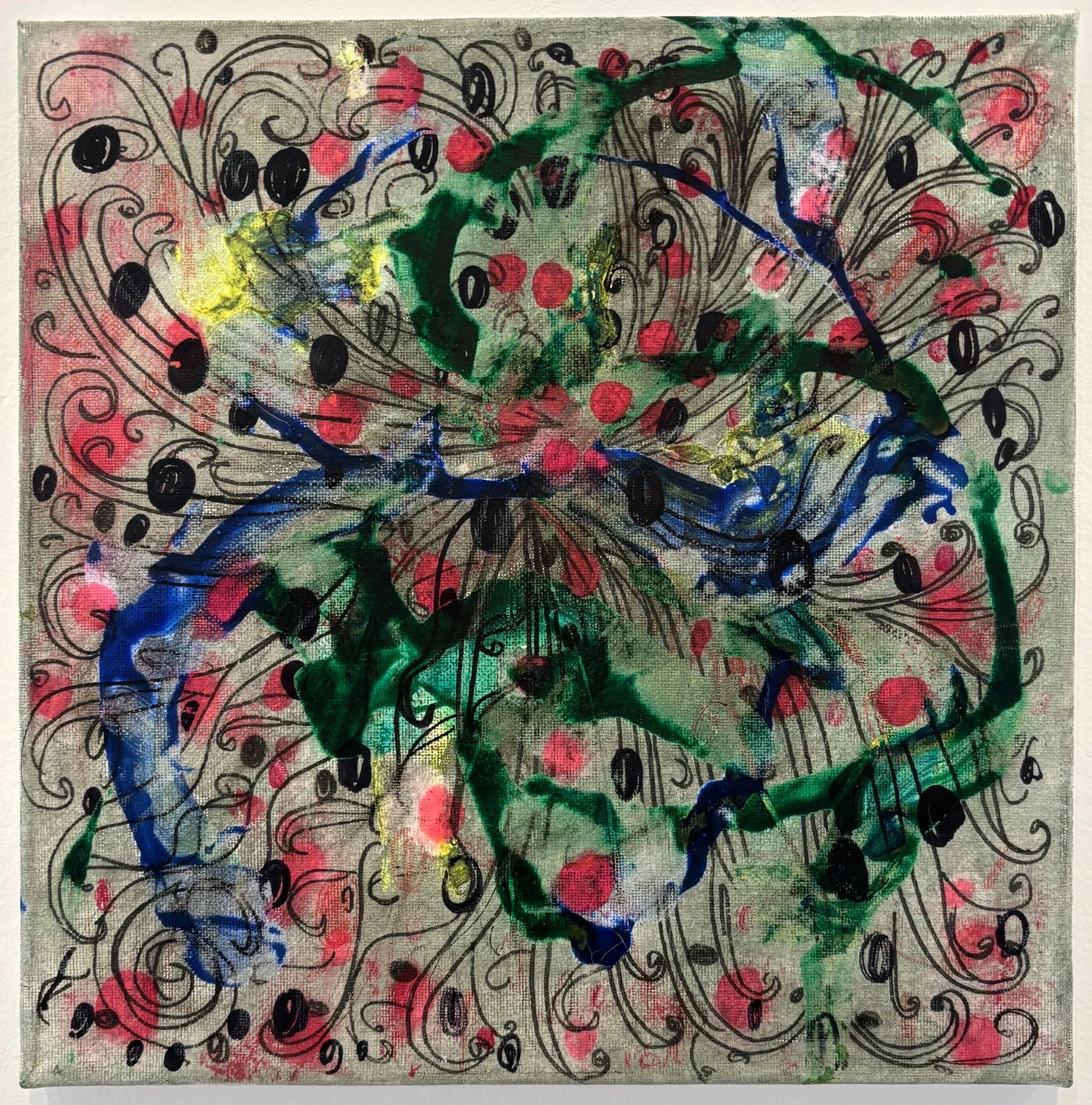
William J. O'Brien and Ike: Untitled, 2026. Tempera, ink, gouache, acrylic, and pen on canvas, 12 x 12 inches.
Bold gestures of green and blue paint meet ornamental lines and a field of black and pink circles to create an elegant overall pattern in this collaboration between Chicago-based artist William J. O'Brien and Ike, a chimpanzee at Primate Rescue Center.
O'Brien builds on Ike's original composition while adding the intuitive gestures that define his own artworks. Working in a variety of mediums and materials, O'Brien is known for his exuberant use of color and pattern in both figurative and abstract works. His has exhibited widely and his work is included in the permanent collections of the Art Institute of Chicago, Hammer Museum in Lost Angeles, and Perez Museum in Miami, among many others.
Ike, meanwhile, has never been one to blend into the background. Loud, confident and full of personality, he can often be seen “testing” the strength of his cage by pounding on the bars with his muscular arms.
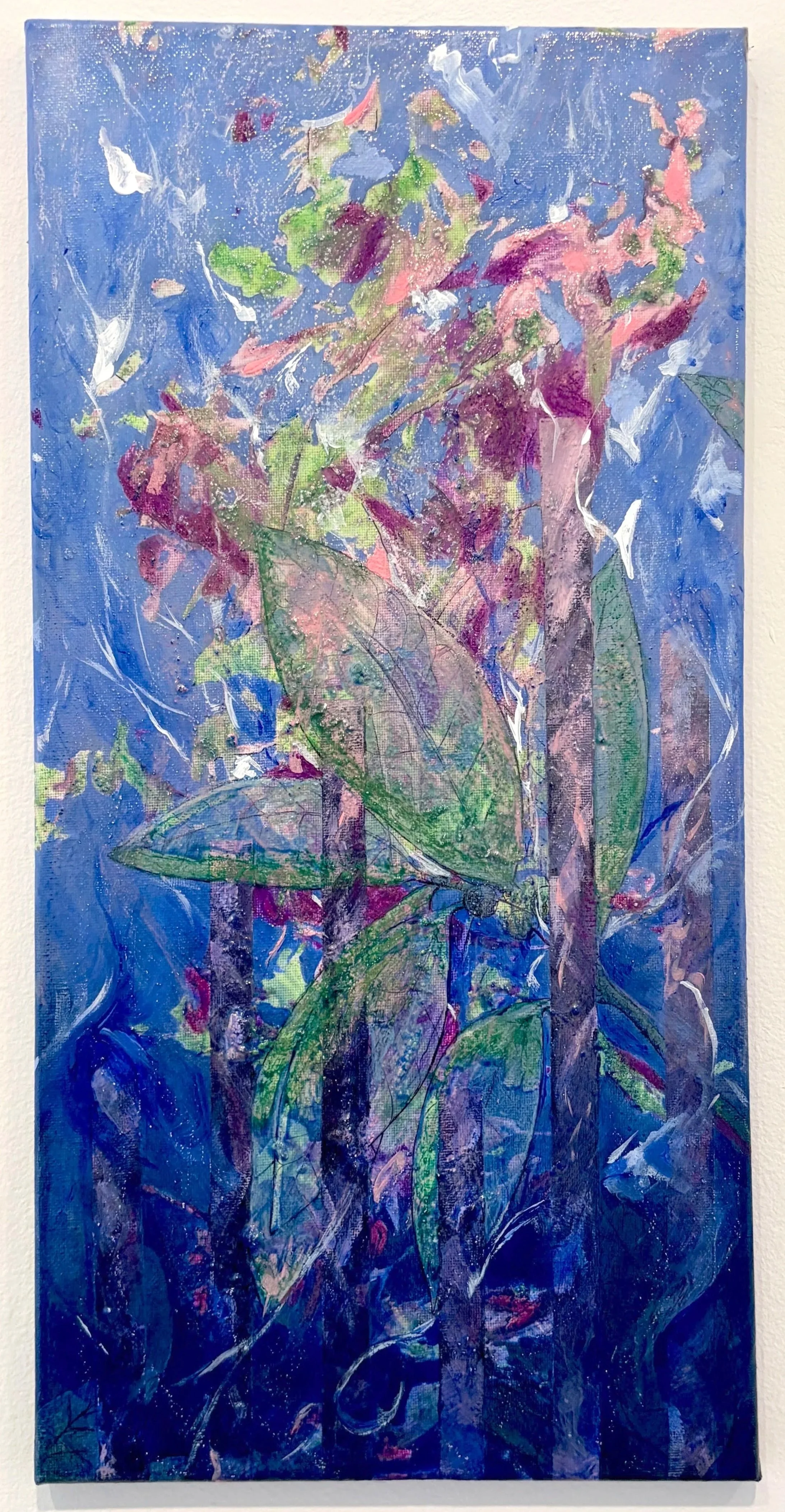
Jena Seiler and Dehlia (with Chester and Bisou): What Do Spider Monkeys Dream Of?, 2026. Tempera, acrylic paint, acrylic glaze, and permanent marker on canvas, 20 x 10 inches.
Using the colorful vertical canvas animated by spider monkey Dehlia, the Lexington-based artist and educator Jena Seiler created a work that alternates between abstraction and representation. Upon close inspection, a translucent tree branch with berries can be seen among the green and purple marks in the background that suggest petals of flowers.
Seiler is a lecturer in the Lewis Honors College at the University of Kentucky, and her art focuses on the everyday as a subject of inquiry and awe. She works across a variety of media and has had solo exhibitions at the Spiva Art Gallery in Joplin, Missouri; the Kitchen Table Gallery in Philadelphia; and the Majestic Gallery in Nelsonville, Ohio. Her collaborative film projects with Tijah Bumgarner have won numerous awards.
Dehlia can be heard squealing with delight each morning when breakfast arrives. She is a fairly shy monkey but is very chatty with her spider monkey companions, including Chester and Bisou, who helped her with this painting.
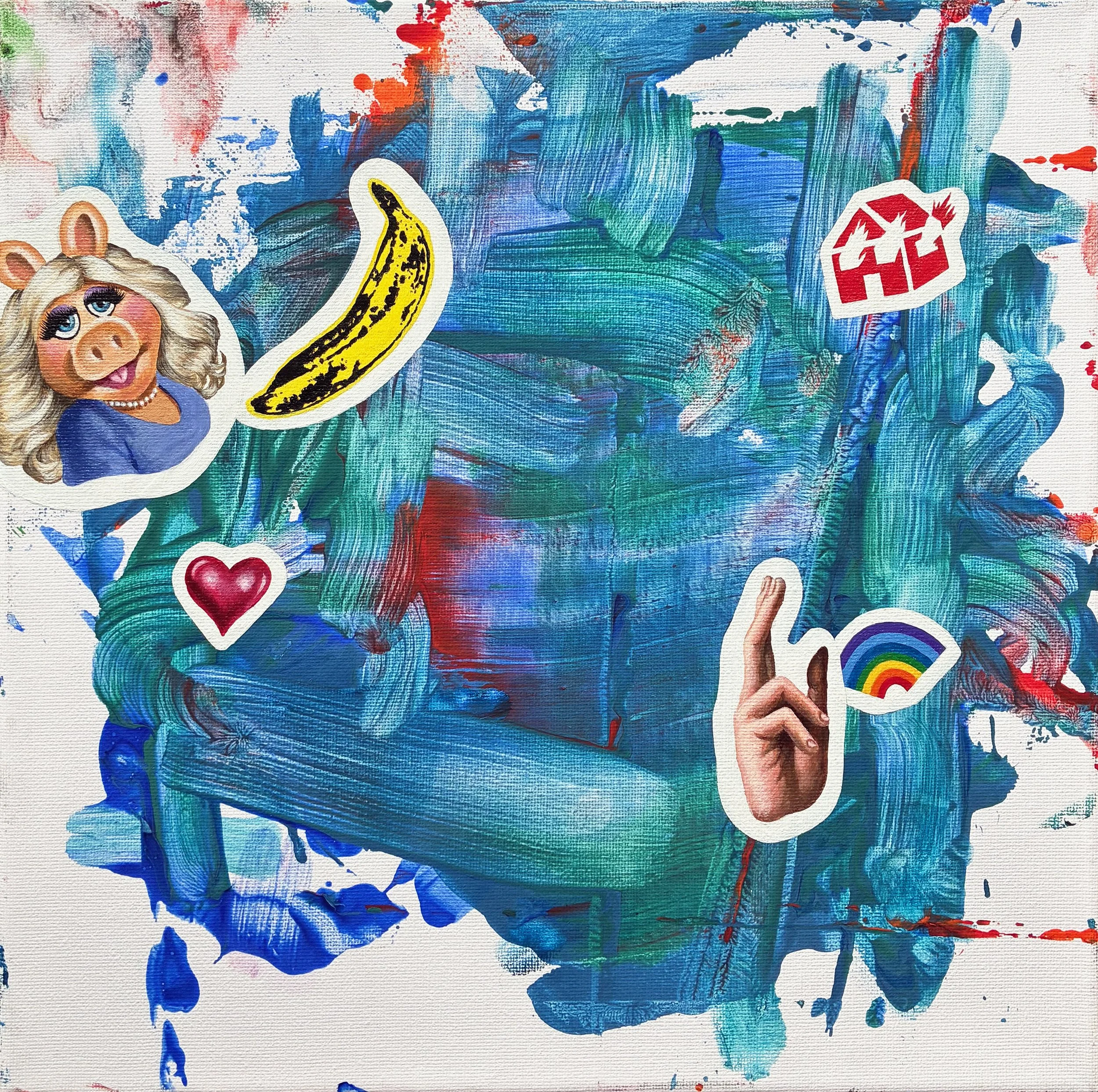
Ben Tollefson and Jenny: Making Marks (collaboration with Jenny), 2026. Tempera and acrylic on canvas, 12 x 12 inches.
Preserving the solid blue and green form of chimpanzee Jenny’s original composition, Savannah-based artist Ben Tollefson adds what appear to be an assortment of recognizable stickers to the surface of the canvas. Upon closer inspection, however, these seemingly ordinary embellishments reveal themselves to be masterfully rendered trompe l’oeil paintings that create a convincing illusion of three-dimensionality.
Among the iconic images in the painting are a portrait of Miss Piggy, the legendary fame-obsessed diva character from the Muppets; the iconic yellow banana by Andy Warhol which appeared on the cover of the debut album by The Velvet Underground & Nico; and a stencil of a burning house, a trademark of the multi-media artist and activist David Wojnarowicz.
Tollefson is known for his paintings with illusionistic imagery and a camp sensibility, inviting viewers to consider constructions of identity and the daily performance of gender. He has exhibited in group and solo exhibitions throughout the United States, including at Laney Contemporary in Savannah; Brintz-County Gallery in Palm Beach; and Spring Break Art Show in New York. He currently serves as Curator at the SCAD Museum of Art.
Jenny is among the smallest of the Primate Rescue Center’s chimps, but she doesn't back down when confronted by others. She enjoys playing pranks on humans and likes to play “chase” with caregivers from within her outdoor enclosure.